
Partnership Loop on Show at Dscoop in Melbourne
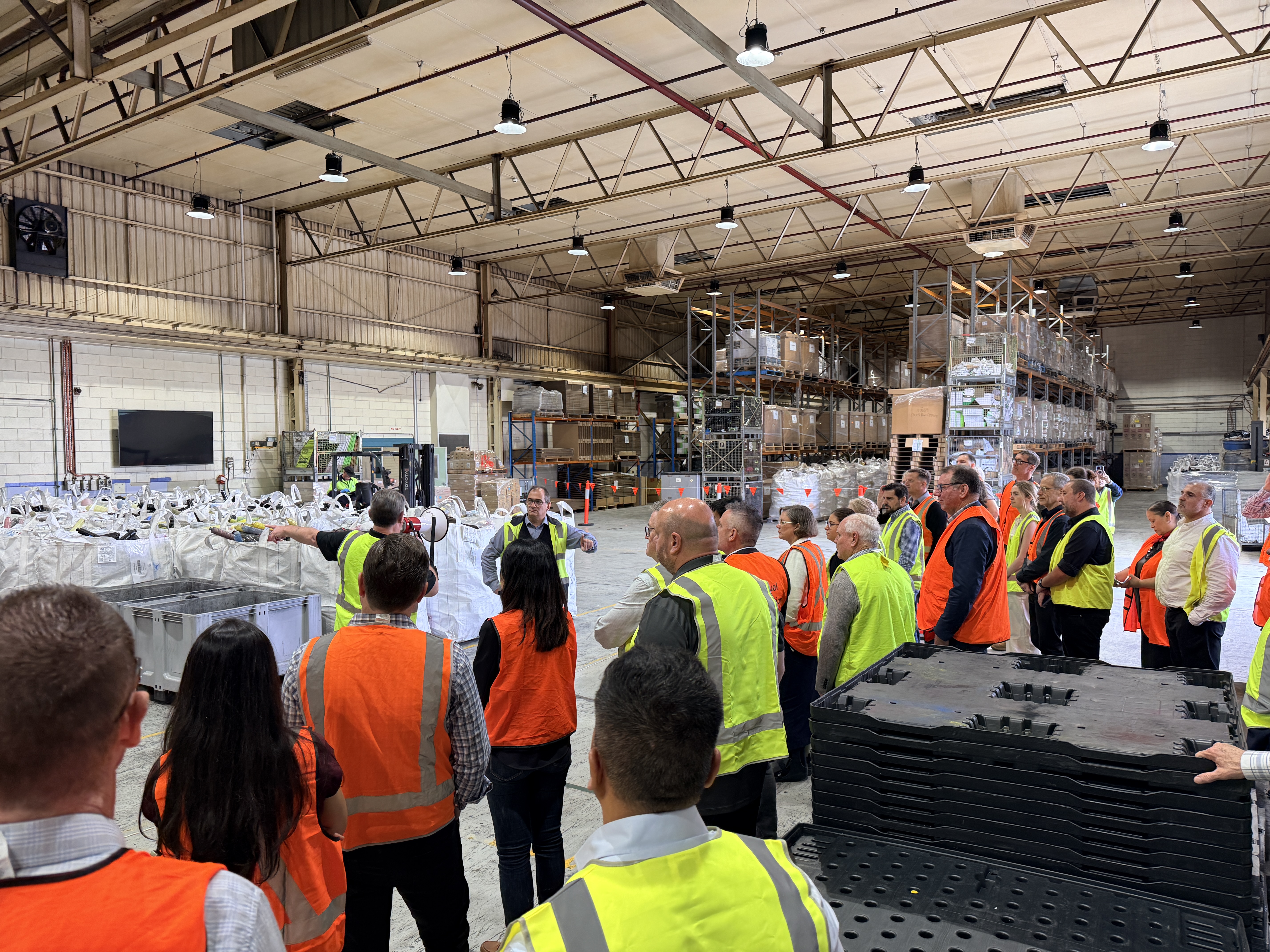
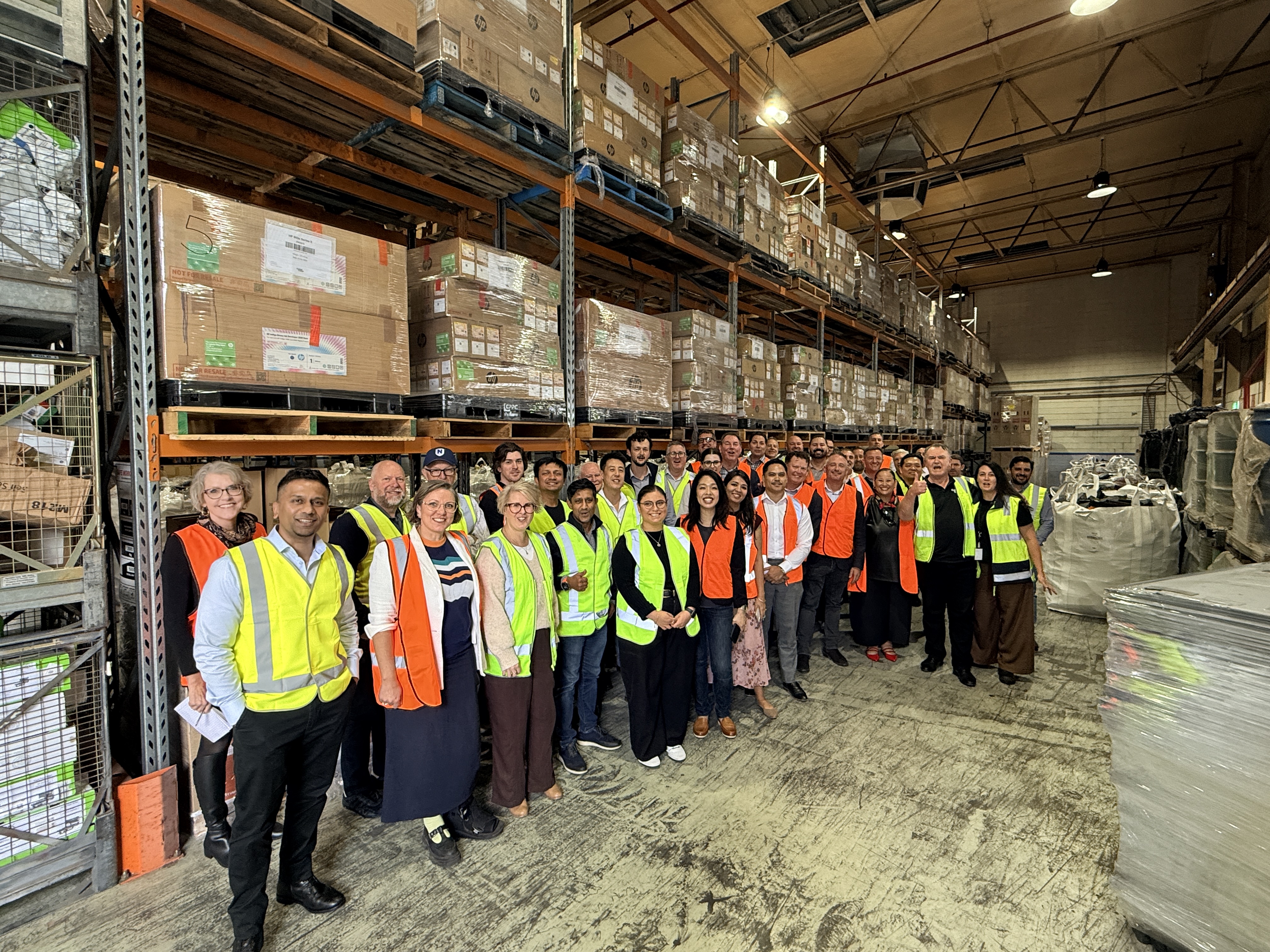
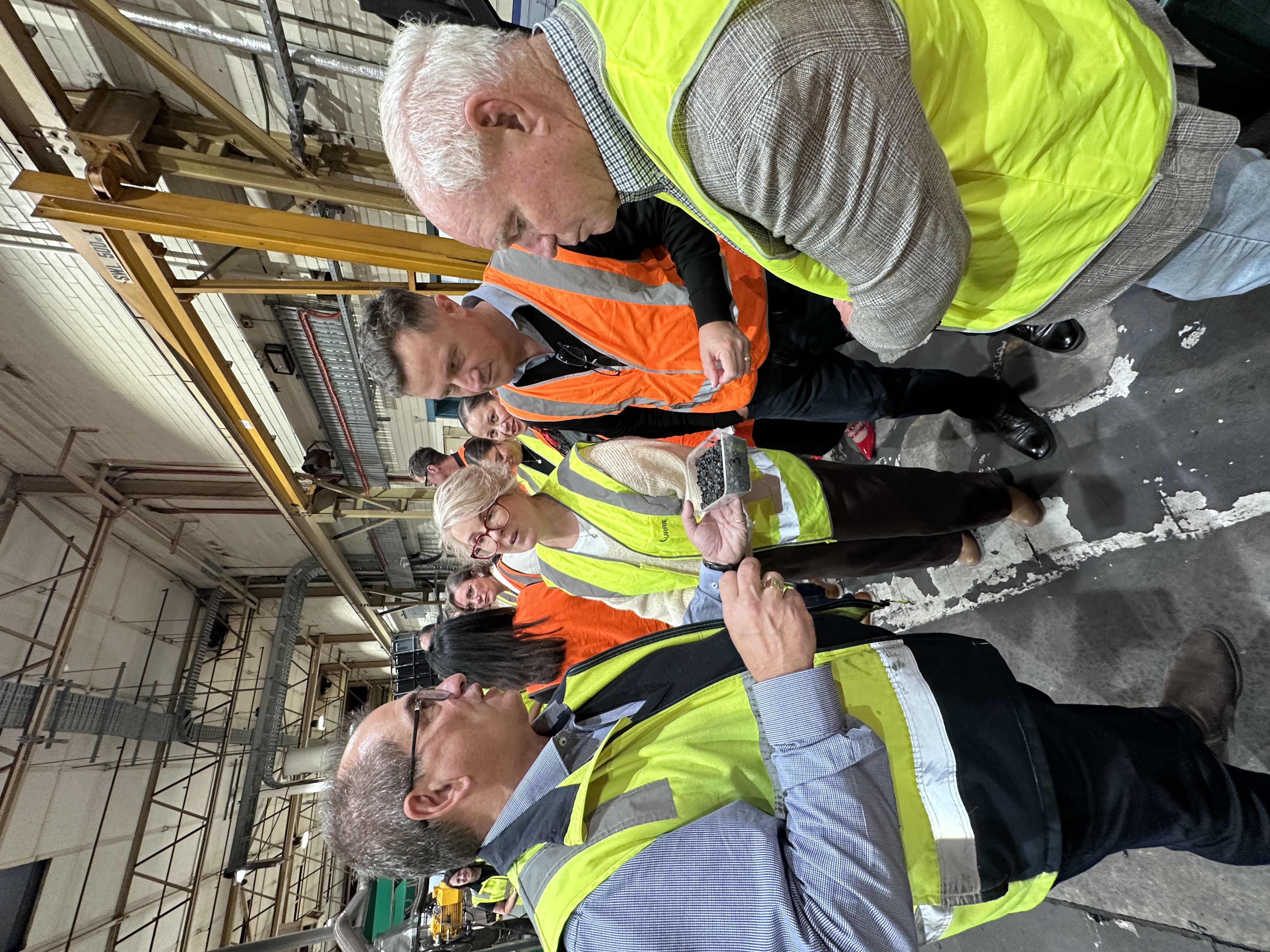
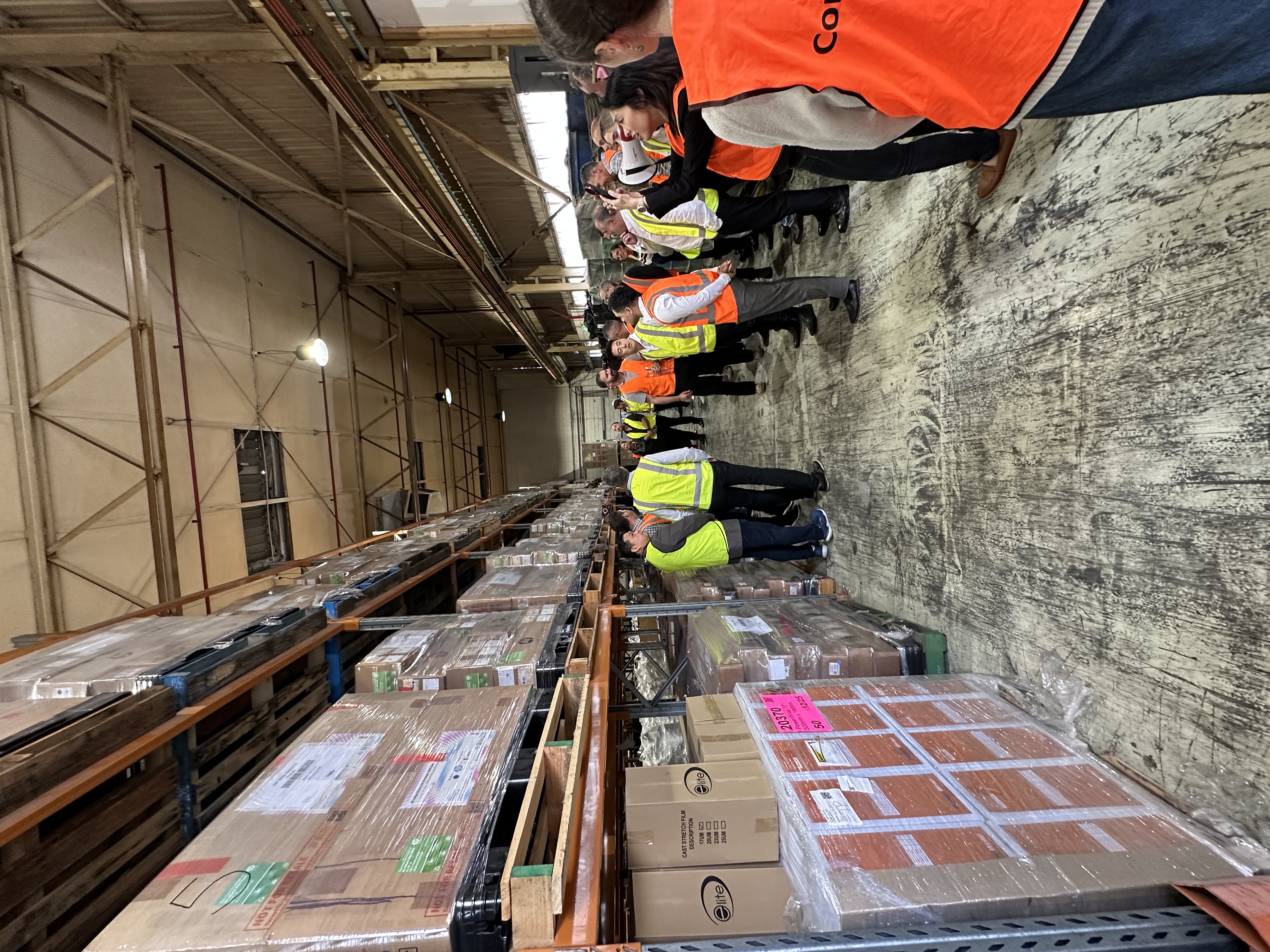
A Dscoop HP Indigo Sustainability Exchange gave more than 30 industry professionals an exclusive, behind-the-scenes look at HP Indigo digital press consumables are collected, recycled and transformed through circular economy processes at Close the Loop’s advanced recycling facility in Melbourne’s Reservoir.
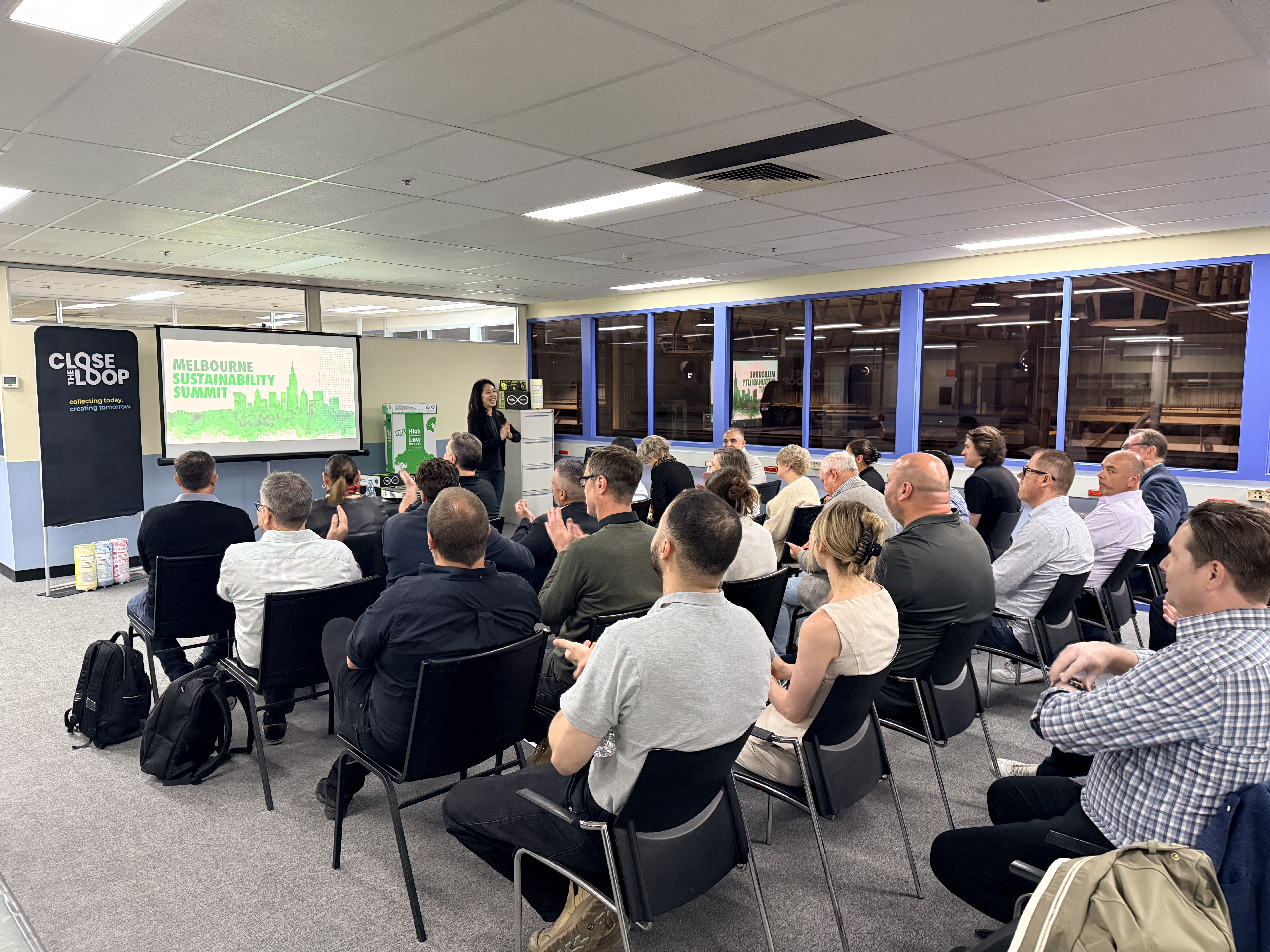
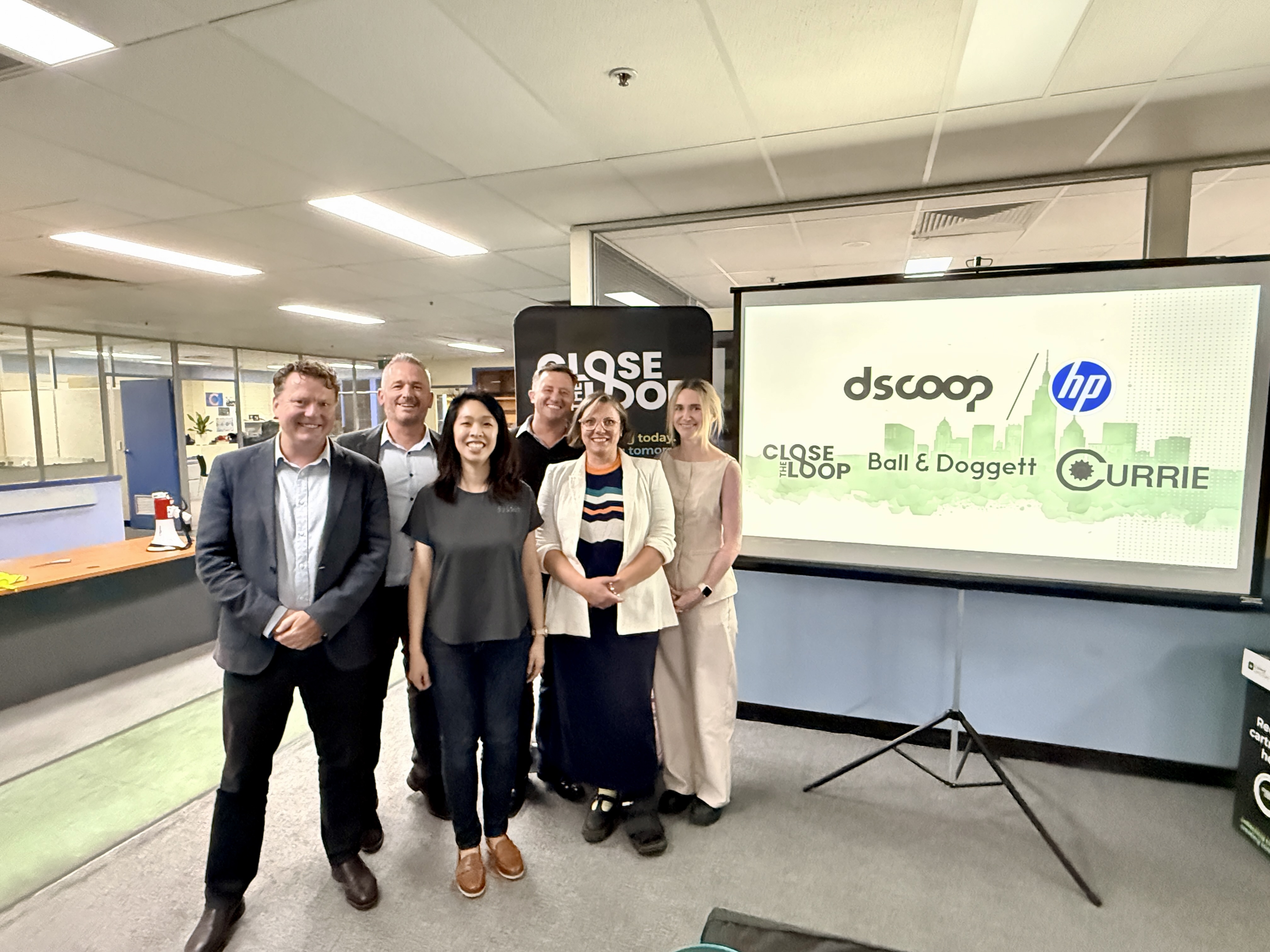
The event, brought together Dscoop, HP, Currie Group, Ball & Doggett and Close the Loop with leading print service providers who use HP Indigo digital press technology, to provide practical insights into the processes which underpin the achievement of a circular economy.
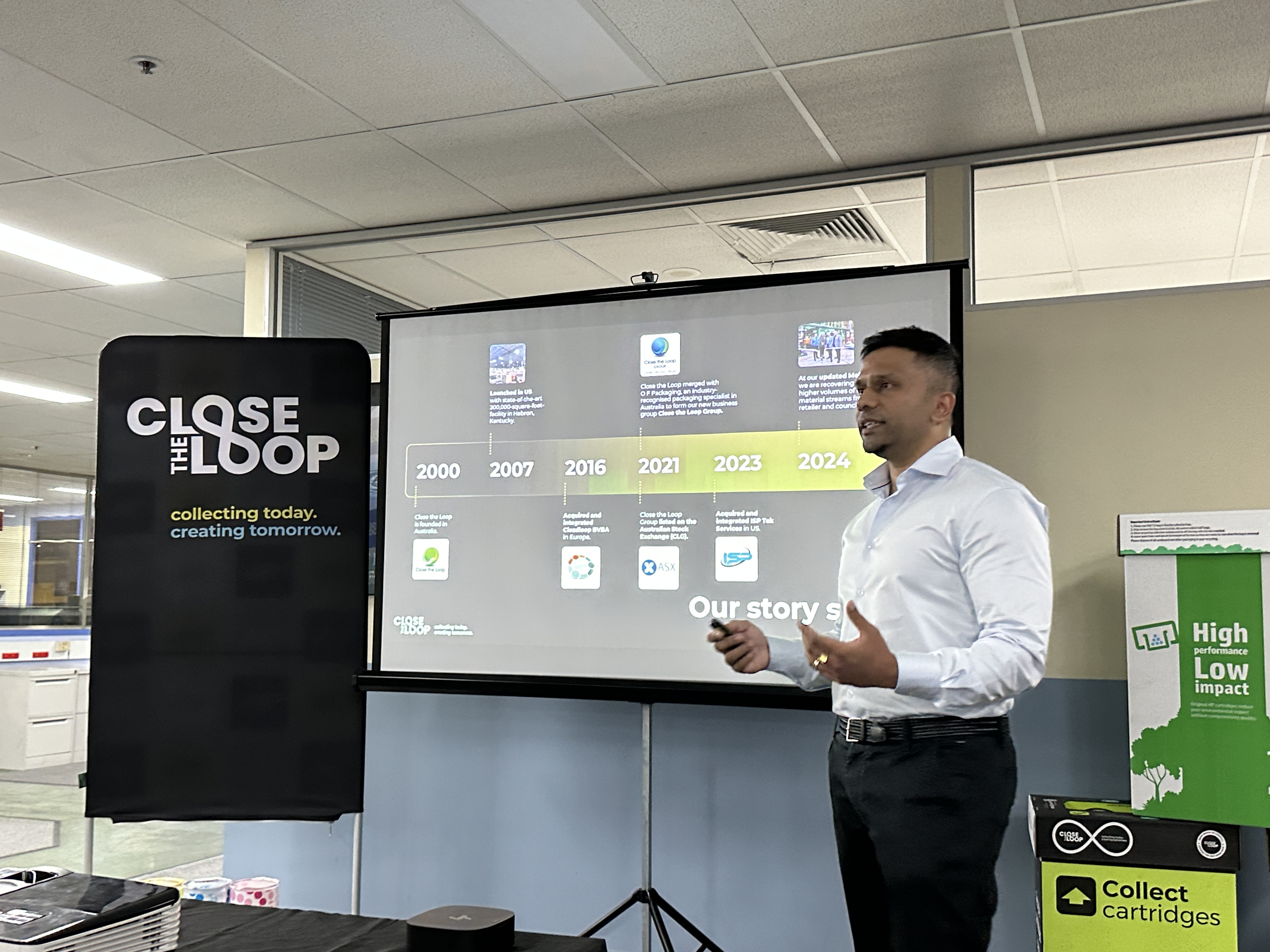
Close the Loop is an Australian-led initiative, founded in 2001 to ‘turn waste into opportunity’ with a commitment of zero waste to landfill. Today, it is an ASX listed company – the only one with audited, zero waste to landfill certified reporting – with global operations in North America, Europe and South Africa as well as Australia.
As well as partnerships with a diverse group of international OEMs, Close the Loop has around 60,000 collection sites in Australia, providing opportunities for consumers to recycle everything from batteries to cartridges.
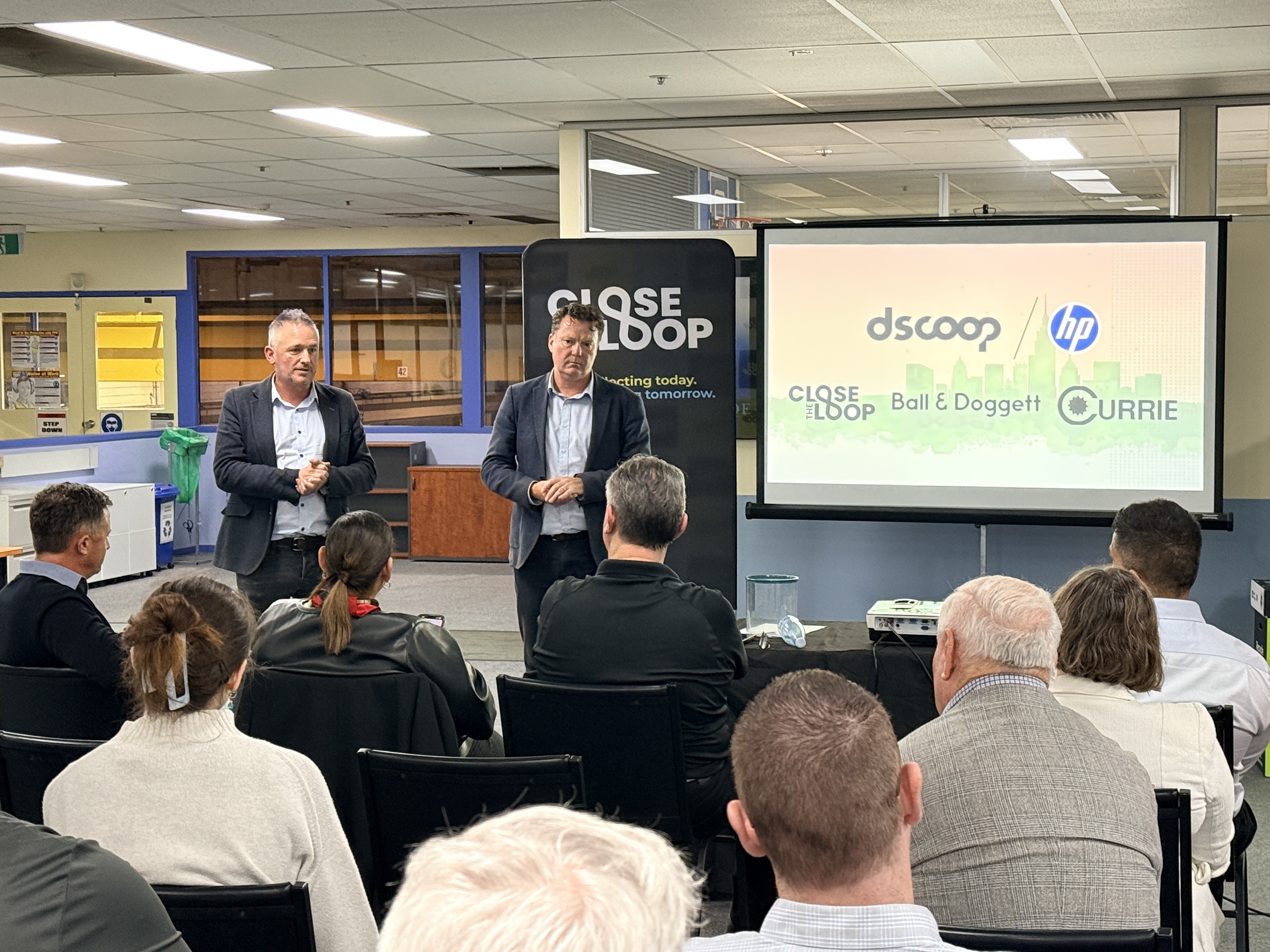
Close the Loop’s CEO and Executive Director Kesh Nair welcomed guests, saying partnerships with brands, retailers, manufacturers and governments all play a vital role in enabling us Close the Loop to ‘do what they do’.
“We are excited to have all the stakeholders in the room, to talk about strategies to progress towards a circular economy, and to better understand the processes which underpin our promises here at Close the Loop,” he said.
Nair then introduced Steve Morriss, co-founder and Head of Circularity, who designed most of the patented equipment used at the plant, to run guests through the principles behind Close the Loop’s operations.

“The first pillar of a circular economy is design – to ensure products stay in circulation for as long as possible and, when it cannot be circulated again, to ensure the atoms and molecules in the raw materials can be used again,” Morriss explained.
“The better a product is designed, the more value you get out of those materials. OEMs like HP are committed to circularity, not because it’s easy or cheap, but because it is what customers expect of their brand. We have been working with them for more than 20 years, recycling both equipment and consumables, and the design of their products represents world’s best practice.”
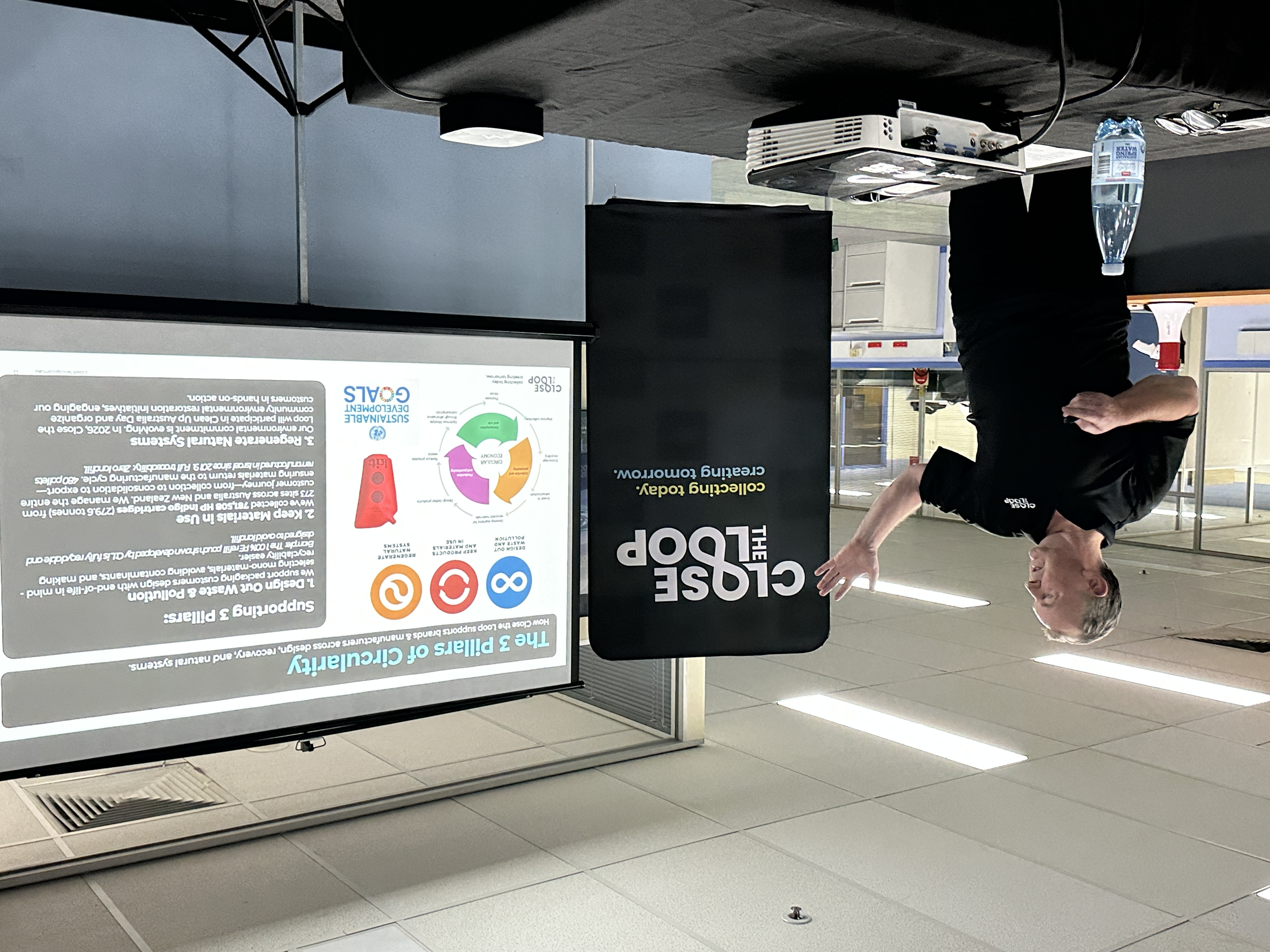
Close the Loop, he explained, separates and refurbishes equipment components for return to HP’s manufacturing facilities in Israel, and also processes consumables like toner canisters, and toner itself, into other products.
Over the past 20 years, the partnership has seen over 17.5 million HP products processed globally, 8.5 million of those in the Melbourne facility. That represents some 76% of all HP spare parts and consumables products, diverting more than 7,800 tonnes of HP product from landfill.
The consumable products are used in a couple of key products, including rFlex® recycled plastic resin made from mixed post-consumer soft plastics, printer cartridges and cosmetic packaging, which can be used in injection, rotational or extrusion moulding to create products from pallets, to crates, shopping trolleys, baskets and tubs, and TonerPlas® engineered asphalt additive.
“Our biggest challenge has always been recycling toner,” Morriss explained. “It’s actually a co-polymer of either polystyrene or polyester but, because it is engineered to carry a charge, it is notoriously difficult to handle and recycle.
“With TonerPlas®, we mix the toner with recovered soft plastics, including HP Indigo toner canisters, to create an additive which, when added to bitumen, results in roads that are stronger, and last longer, than traditional asphalt surfaces. It’s a great example of the ‘holy grail’ of recycling – to create a recycled product that is as good, if not better, than existing solutions.”
Guests were then taken on a tour of the plant, where they had the opportunity to see the TonerPlas® process in full swing, with HP canisters delivered to a shredding unit before the output was mixed with toner and other recycled material to deliver strings of TonerPlas® pellets.
Following the tour, Nair and Morriss took questions from guests, who were keen to learn more about the operation, and to explore the potential impact of proposed extended producer responsibility (EPR) legislation and C-Flex guidelines.
It was a neat segue into a presentation from Zaidee Jackson, Sustainability & Compliance Manager for Ball & Doggett, who reminded guests that embedding sustainability was not a matter of policy, or compliance, but represented a real, competitive advantage for businesses in Australia, and around the world.
“Research shows that consumers want the option to choose sustainable products, even if it costs a little more,” she said.
“Sustainability is much more than a ‘box ticking’ exercise; it’s about governance, risk-based decision-making, reputation and procurement requirements, and transparency throughout your supply chain.
“Effective product design considers everything from materiality, to technology, to structures, to outcomes and end-of-life experience. The more you lean into your suppliers for information, the more confident you can be in conversations that have commercial outcomes for your business.”
Choosing the right, trusted partners is vital, she added, echoing what became the theme of the evening.
“Circularity is the North Star we are all trying to work towards, but you don’t need to be experts. Suppliers like those in the room here today, are here to collaborate. That’s the key message,” she said.
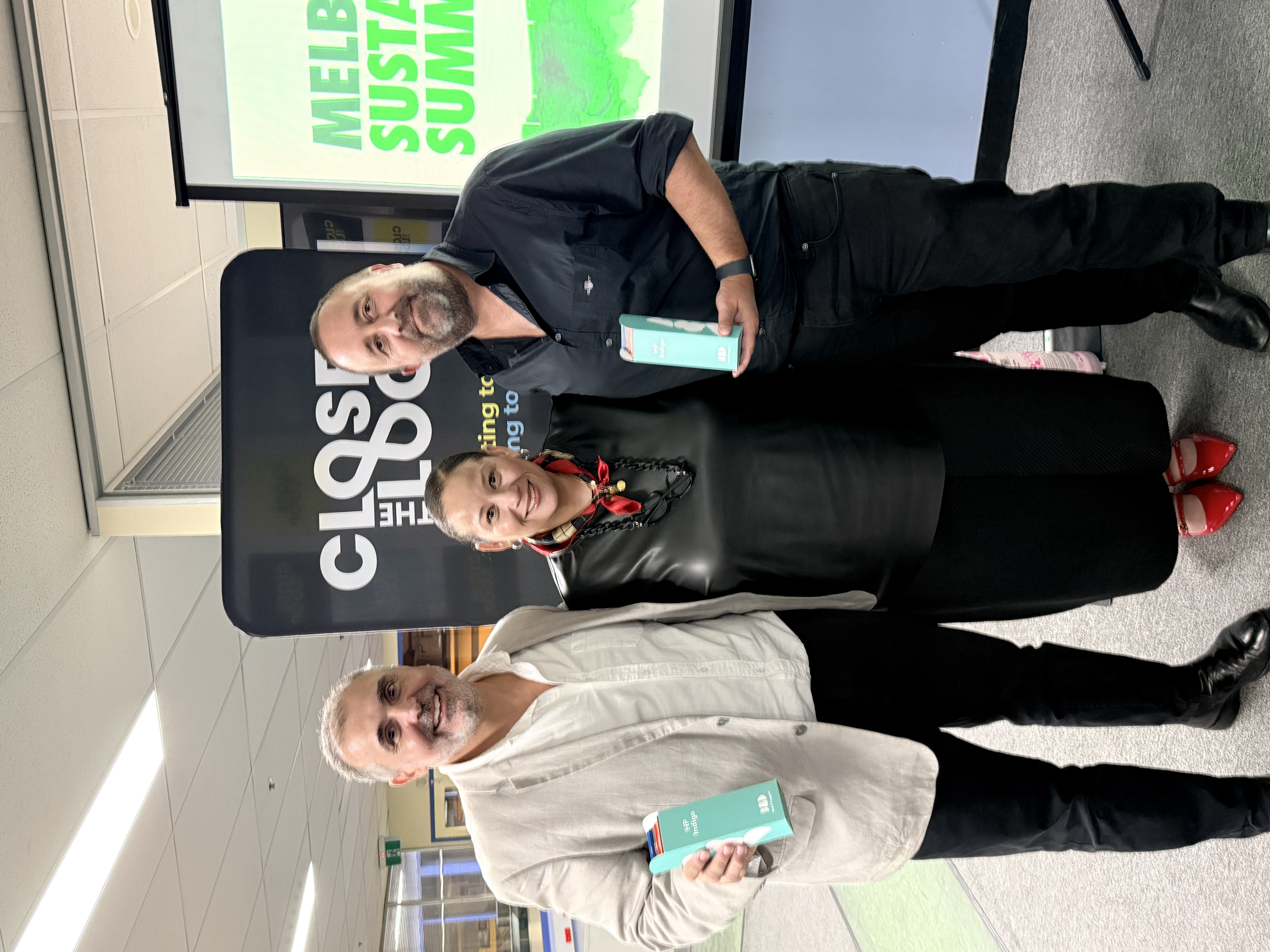
Ball & Doggett took the opportunity to launch a new, HP Indigo Swatch Book, featuring 153 different stocks which are certified for use on HP Indigo digital presses, another resource designed to equip customers to meet demands for quality and speed to market.
Amy Yu, Community Success Manager from Dscoop, then introduced the benefits of the global HP Indigo user community to the gathering, and not only provided details of upcoming Dscoop Edge Rockies in Denver, Colorado in March, and Dscoop Edge Slovenia in June, but also gave two lucky guests a complimentary registration for either event.
The value of Dscoop was endorsed by Peter Barr, from Photo Create, who shared his own very positive experiences at previous Dscoop events with guests. Craig Walmsley from HP and Mark Daws from Currie Group then brought the event to a close, reiterating their companies’ commitment to partnership, thanking guests for attending the Dscoop function, and voicing appreciation to the Close the Loop team once again, on behalf of the group.
By designing recovery, reuse, repurposing and recycling solutions, Close the Loop is driving the shift from a linear model of consumption to a circular economy – but it was clear that it is partnerships which underpin successful circularity.
Print service providers, and their customers, can sign up to recycle product through Close the Loop by simply going to the company’s website closetheloop.com.auand requesting a starter kit to collect everything from mobile phones and batteries, to soft plastics.
For more information on anything in this media release, please use the following links:
- Close the Loop - www.closetheloop.com.au
- Currie Group - www.curriegroup.com.au
- Dscoop - www.community.dscoop.com/
- Ball & Doggett - www.ballanddoggett.com.au