
The Rise of Robotics in Print: What’s Changing and Why it Matters - Take the Survey
By David Sweetnam and Mark Boyt, Keypoint Intelligence
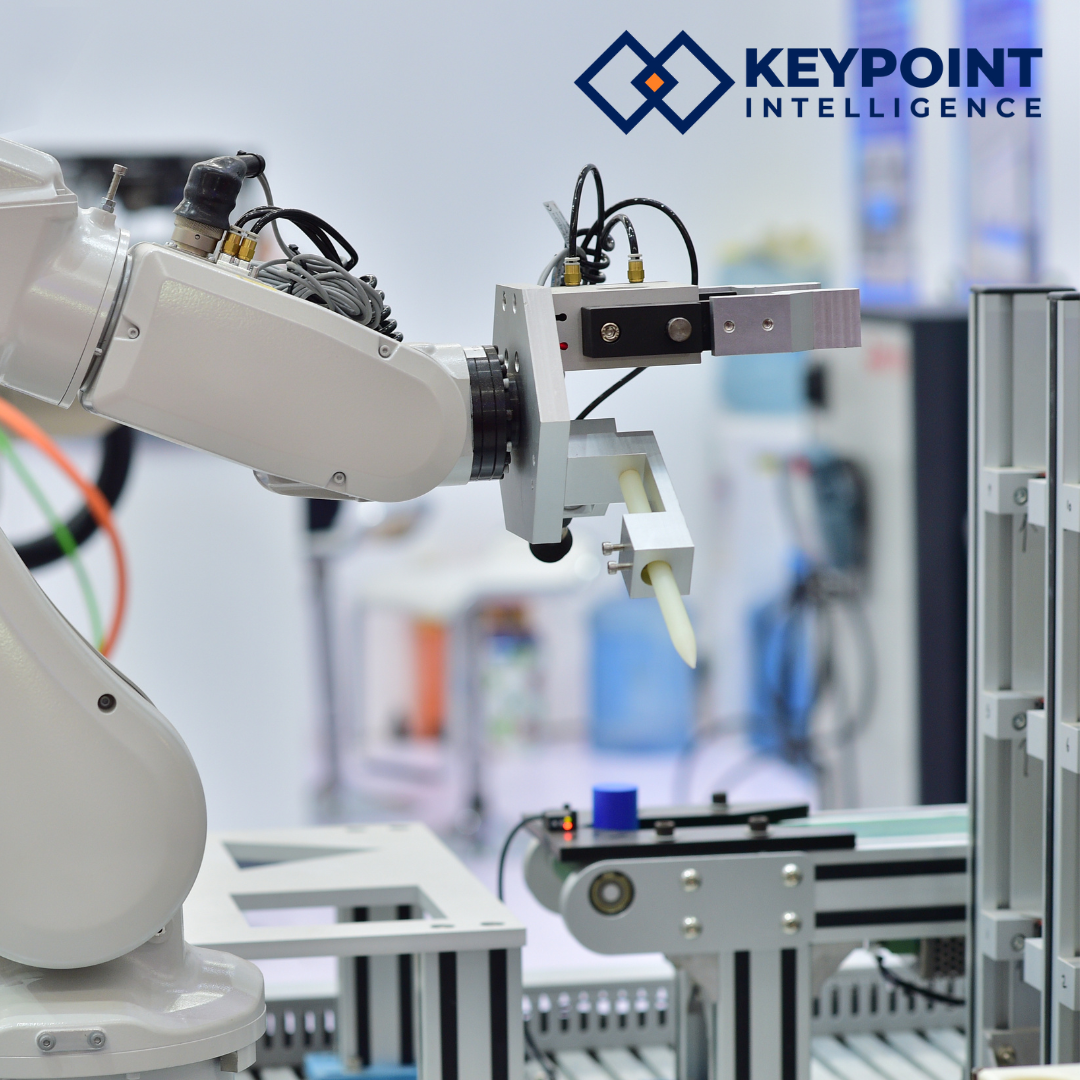
Robotics has reached a meaningful point in production print. Once viewed as a technology suited to automotive lines, robots now support flatbeds, label presses, bindery systems, and textile operations. The driver is simple. Print providers need higher throughput, steadier quality, and reliable output in an era defined by labour shortages.
Early conversations with production environments reveal clear themes. Robotics helps stabilize staffing by taking on repetitive, physical tasks and running unattended for long periods. Productivity improves as well. Automated board loading, robotic palletizing, and integrated material handling reduce idle time and allow presses and finishing lines to operate closer to full capacity. Quality benefits, too. Vision-guided systems keep alignment tight, minimise handling errors, and create more predictable results.
Economics matter just as much. Many adopters report saving one or two full-time roles per line while boosting uptime. Even small utilisation gains translate into meaningful annual margin improvements. As workflows settle, payback periods are often shorter than expected.
Challenges remain. Upfront costs, integration complexity, and questions about job variability persist. Teams also need time to adjust, especially as robots tend to reassign work rather than eliminate it.
To understand these shifts, Keypoint Intelligence is launching a global study on robotics in production print. Whether your organisation is already using automation, considering it, or steering clear for now, your input will help define a clearer view of where robotics fits in the industry’s future.
Take the survey and help shape the industry’s next chapter. It takes just 15 minutes, and in return, all respondents will receive $120 AUD.
About the Authors
David Sweetnam, Director of Research and Lab Services EMEA/Asia David has over 21 years of experience in the imaging industry, spanning lab analysis, research, and technical services roles in the USA and Europe. He established Keypoint Intelligence’s European lab in 2007 and has led its growth ever since. Earlier in his career, he advised corporate and public sector clients on office imaging and software solutions. David holds a Bachelor of Science in Chemistry from the University of Reading.
Mark Boyt, Principal Analyst Production Workflow Software
Mark Boyt is the Principal Analyst for Production Workflow Software at Keypoint Intelligence, where he examines market trends, evaluates emerging technologies, and provides practical guidance to help clients optimize their production workflows. His expertise draws on years of leadership in software marketing and automation, including his role as Global Head of Software Marketing at Xerox. Known for translating complex software concepts into clear, actionable strategies, Mark brings a strong blend of technical insight and market experience. He is based in the UK.